Solar-powered tuk tuks: how a 620 W roof adds about 50 km a day
The Neptune EV Cargo offers an optional 620 W rooftop solar system that adds about 50 km of free driving a day. Here is what solar charging can and can’t do for an electric three-wheeler.
Sri Lanka gets strong sunshine for most of the year, and researchers have been studying how photovoltaic (PV) panels can help charge electric three-wheelers and cut grid electricity use.
Neptune puts that idea on the road. The Neptune EV Cargo offers an optional 620 W rooftop solar system (Rs. 150,000) that, by Garudan’s figures, adds about 50 km of driving a day straight from the sun.
To be clear about the numbers: the EV Cargo’s 20 kWh battery gives about 100 km on its own, depending on load and speed. With the rooftop solar system, total range rises to up to 350 km over a working cycle. Solar tops up the battery while you drive and park; it does not replace overnight charging.
For delivery businesses that spend long hours outside, those free daily kilometres add up to real savings on top of already-low electricity costs.
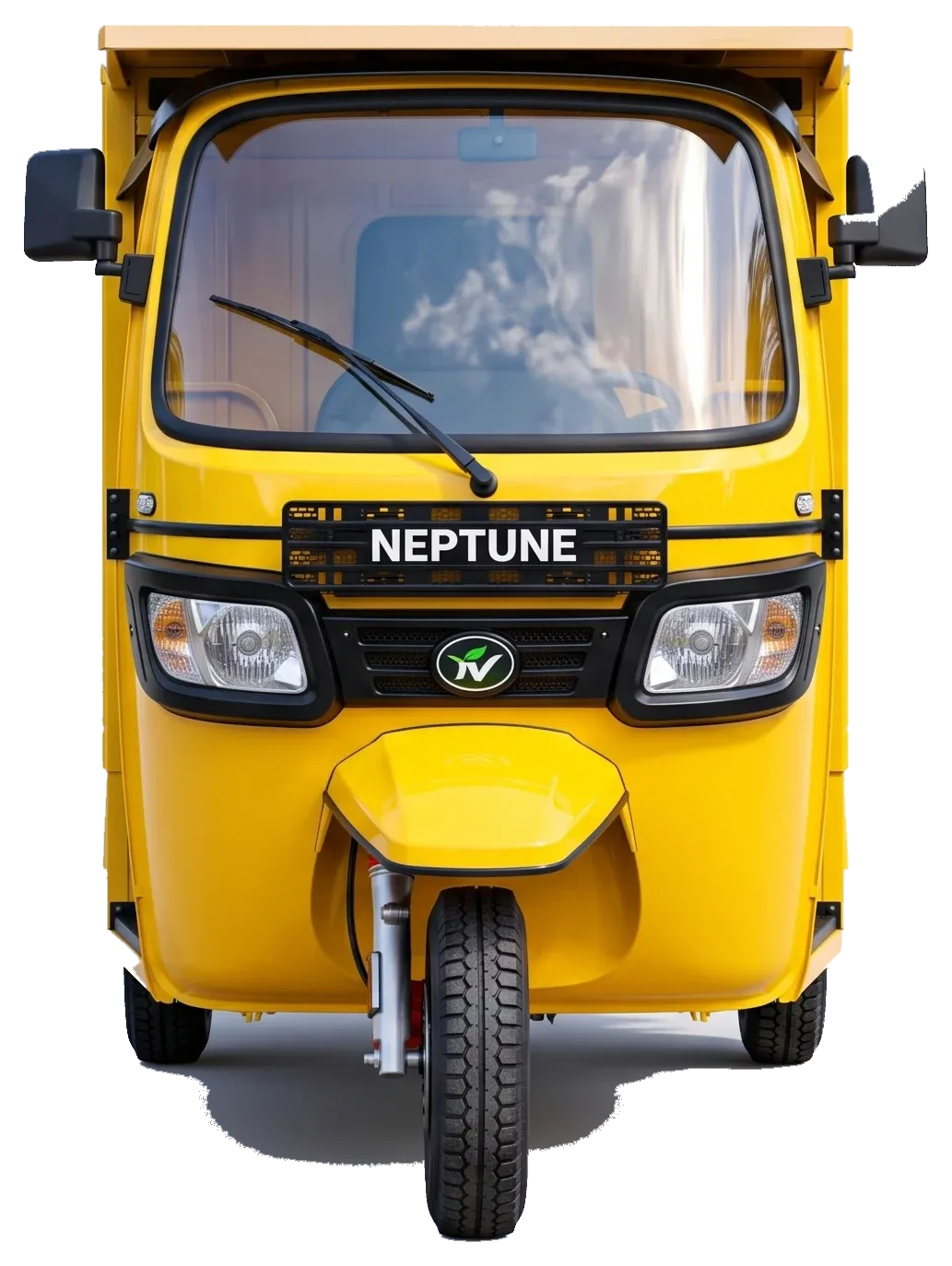
The EV Cargo also carries up to 500 kg in a heavy-duty box, uses a fully automatic gearbox and is made in Sri Lanka, with a limited-time offer price of Rs. 1,775,000.